



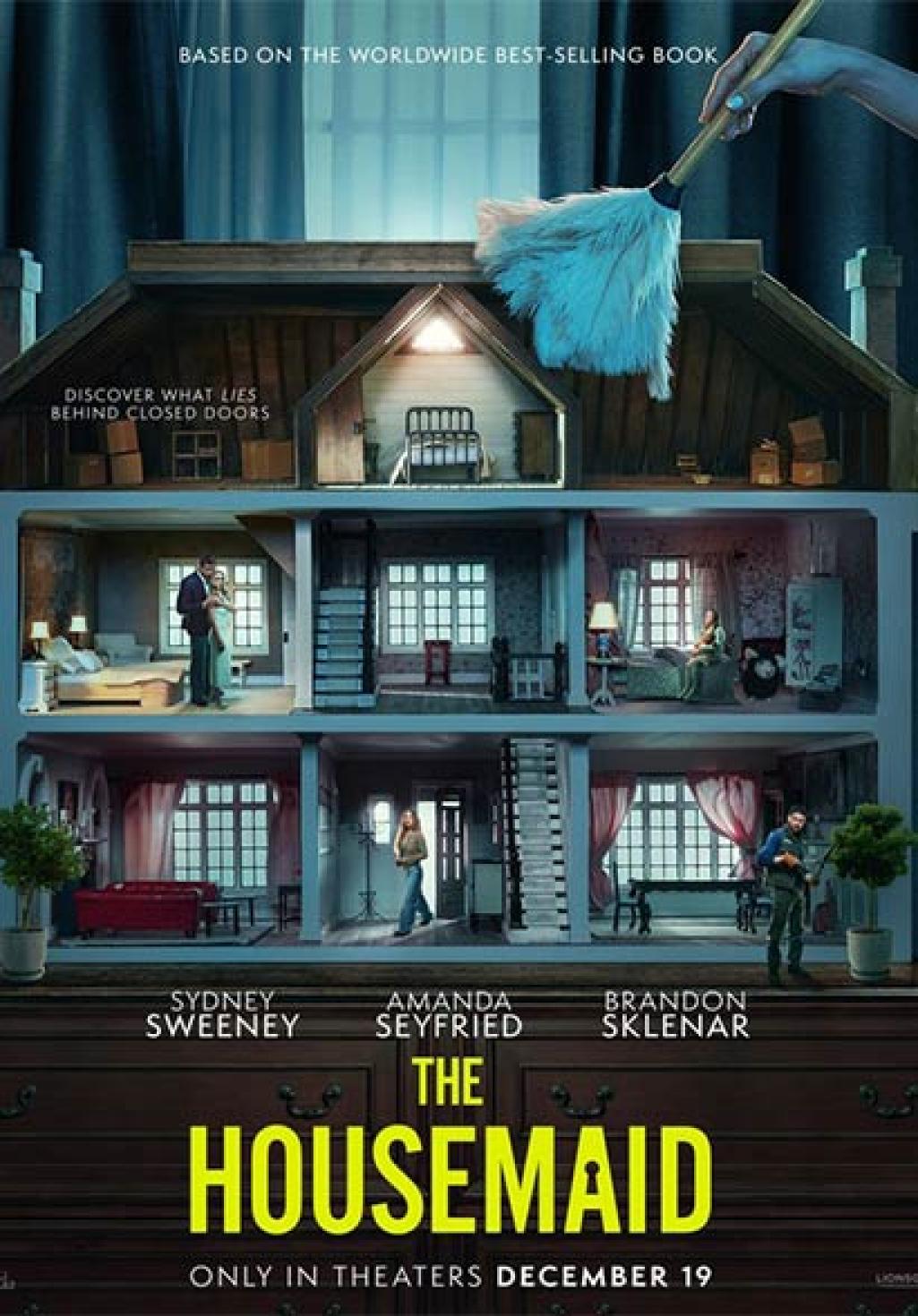
When the perfect home hides the ugliest secrets, no one is merely a victim anymore.
In an era dominated by safe franchises, meticulously calculated cinematic universes, and “algorithm-friendly” products, The Housemaid emerges as a welcome act of rebellion: a fully committed, exaggerated, provocative psychological thriller, proudly indifferent to notions of “good taste.” Directed by Paul Feig—a filmmaker best known for comedies—the film adapts Freida McFadden’s bestselling novel of the same name and delivers exactly what it promises: tension, camp, murky eroticism, plot twists, and a memorable acting showdown.
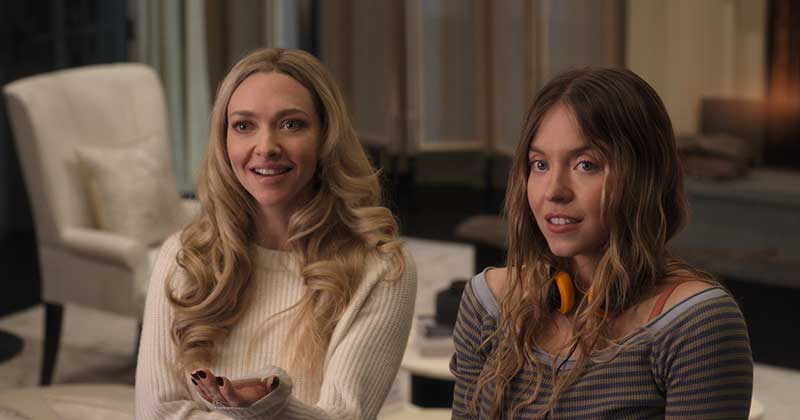
The result is a film that not only embraces the tradition of domestic thrillers from the 1980s and 1990s, but reactivates it with modern energy, fueled by two stars at the height of their powers: Sydney Sweeney and Amanda Seyfried. The Housemaid does not want to be subtle. It does not want to be realistic. It wants to be delicious—and it succeeds.
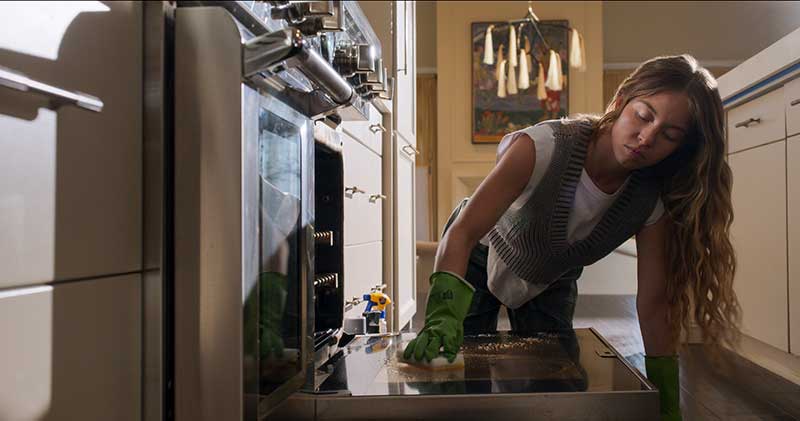
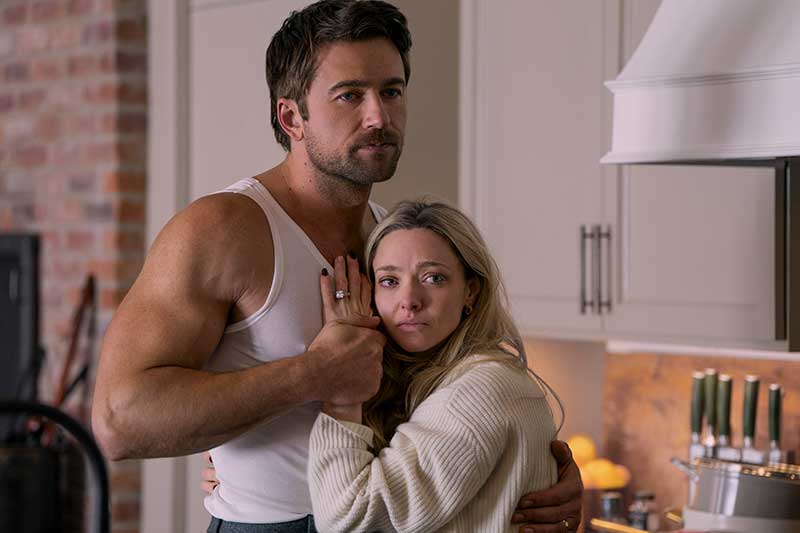
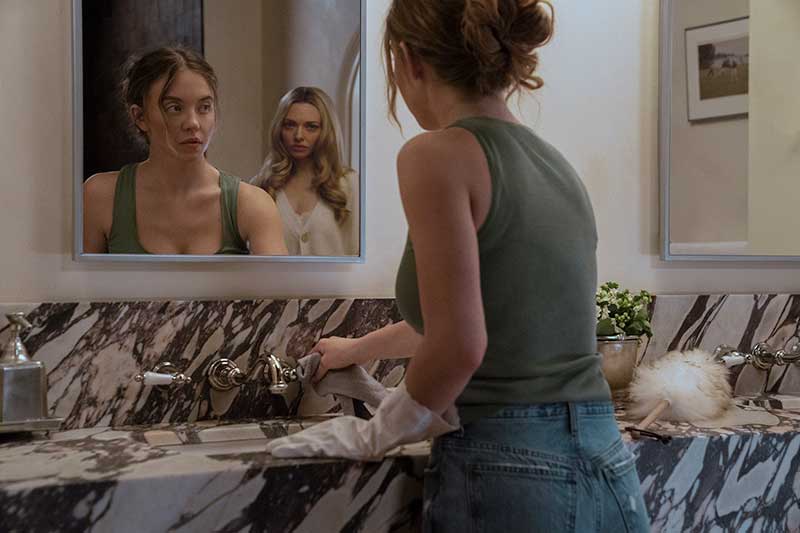
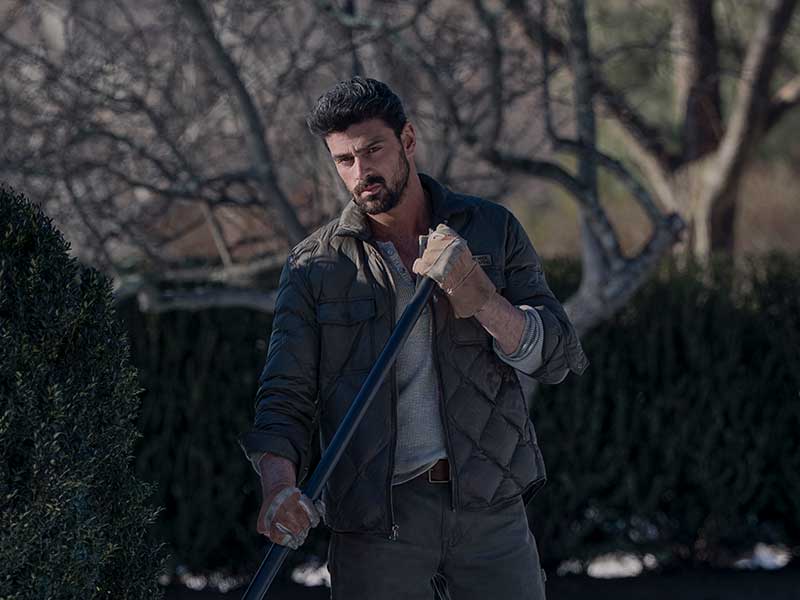
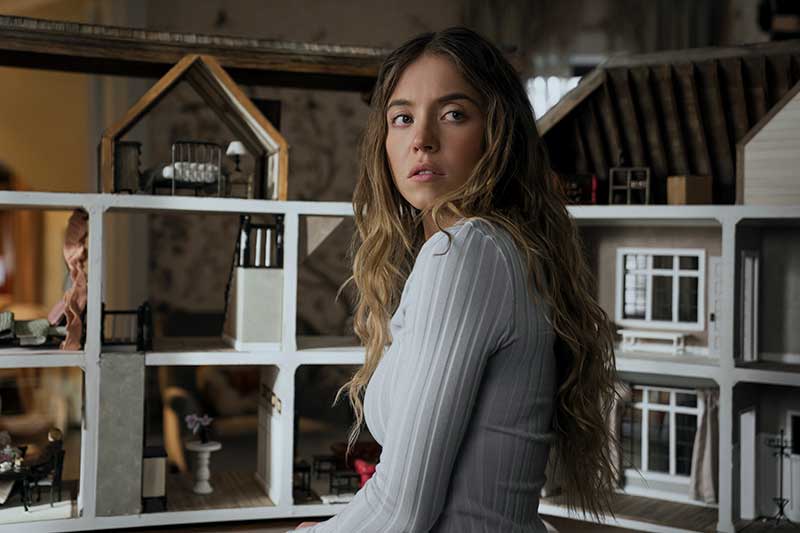
On the surface, the premise feels familiar. Millie Calloway (Sydney Sweeney), a troubled young woman with a difficult past and a desperate need for work, is hired as a live-in housemaid in a luxurious home. The owner, Nina Winchester (Amanda Seyfried), initially appears warm, generous, and slightly eccentric. Her husband, Andrew (Brandon Sklenar), is attractive, distant, yet seemingly well-intentioned. The child, the vast house, the immaculate interiors—everything looks like it was lifted straight from an advertisement for the “American dream.”
The Winchester family name is far from culturally neutral. For viewers familiar with the TV series Supernatural, the association is almost inevitable. Just as the Winchester family in the series hides a universe of violence, trauma, and generational secrets beneath the surface of a “normal” life, the Winchesters in The Housemaid function as a flawless façade masking a deeply toxic core. If in Supernatural the home is never truly safe and family is defined by sacrifice and self-destruction, here the domestic space becomes a site of psychological control, manipulation, and emotional abuse. In both cases, “family” is not a refuge, but a battlefield.
Very quickly, however, this dream turns into an elegant nightmare. Nina begins to swing violently between affection and cruelty, between wide smiles and explosive rage. Instructions contradict each other, punishments are arbitrary, and the atmosphere grows suffocating. Millie, caught between the need to survive and the sense that something is profoundly wrong, tries to adapt as tensions within the family escalate.
This is where The Housemaid starts playing a clever game with the viewer’s expectations. Just when you think you know what kind of film you’re watching, the story takes a sharp turn. Then another. And another. The twists are delivered with almost childlike delight, and the film revels in every moment it pulls the rug out from under you.
One of the film’s greatest strengths is that it never apologizes for what it is. The Housemaid openly claims its lineage from erotic and domestic thrillers such as Fatal Attraction, The Hand That Rocks the Cradle, or Sleeping with the Enemy. These films were defined by excess, heightened emotions, and a voluptuous aesthetic often dismissed as “bad taste” by serious critics.
Paul Feig understands this language perfectly. His direction does not attempt to “correct” the source material or reshape it into a sober psychological drama. On the contrary, he floors the accelerator, crafting a film that looks gorgeous, sounds intense, and is unafraid of the grotesque. There are moments of shocking violence, explicit erotic sequences, and images designed to provoke discomfort—those defining elements of quality exploitation cinema.
Even the film’s generous runtime (over two hours) works in favor of this approach. The story has time to twist, complicate itself, and grow increasingly absurd without losing momentum.
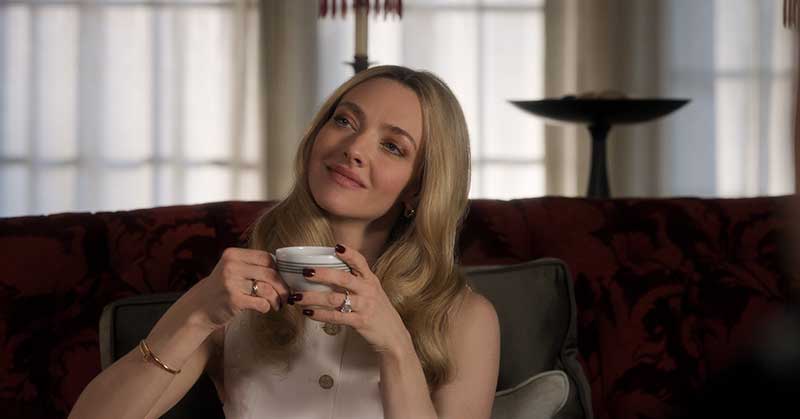
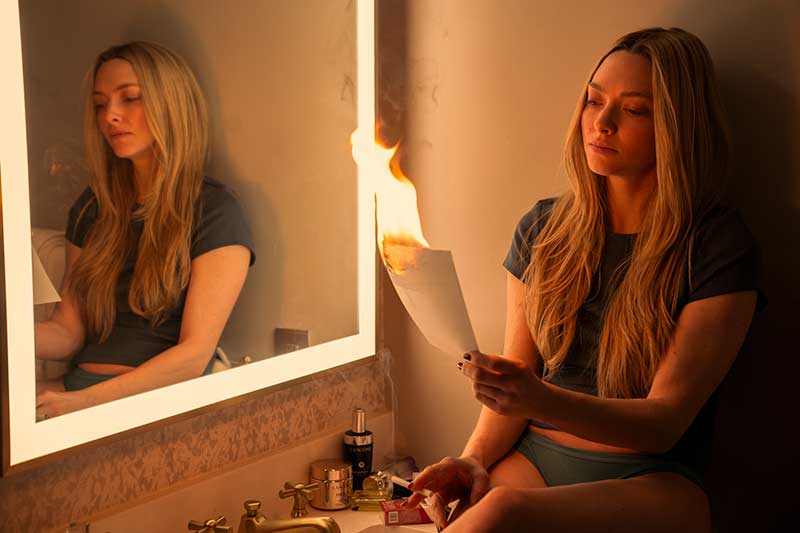
If there is one undeniable reason to see The Housemaid, it is Amanda Seyfried. The actress delivers one of the most captivating and risky performances of her career. Nina is an extreme character: childish, seductive, unstable, terrifying, and at times surprisingly vulnerable.
Seyfried juggles these states with remarkable precision. The transition from smile to rage, from calm to chaos, happens in a fraction of a second, and it is precisely this unpredictability that makes the character so unsettling. She is not a simple “movie psychopath,” but a presence that dominates every frame she appears in.
There are moments when Nina is utterly detestable and others when she becomes almost tragic. Seyfried pulls off the rare feat of making a monstrous character feel, at the same time, deeply human. It is the kind of role that might be overlooked by awards bodies in other contexts, yet it demonstrates impressive acting control.
In the role of Millie, Sydney Sweeney confirms her status as one of the most compelling presences of her generation. Her character is built as a blend of fragility and determination, and Sweeney knows exactly how to exploit this ambiguity.
Millie is neither a classic heroine nor a pure victim. She has secrets, mistakes, and shadows. Sweeney plays this inner tension beautifully, relying on the expressiveness of her gaze and a carefully controlled physicality. Her chemistry with Seyfried is electric, and their confrontations—often silent, driven by looks and subtext—form the backbone of the film.
Although Nina’s role is more “showy,” Millie is the emotional anchor of the story, and without Sweeney’s convincing performance, the film would lose its balance.
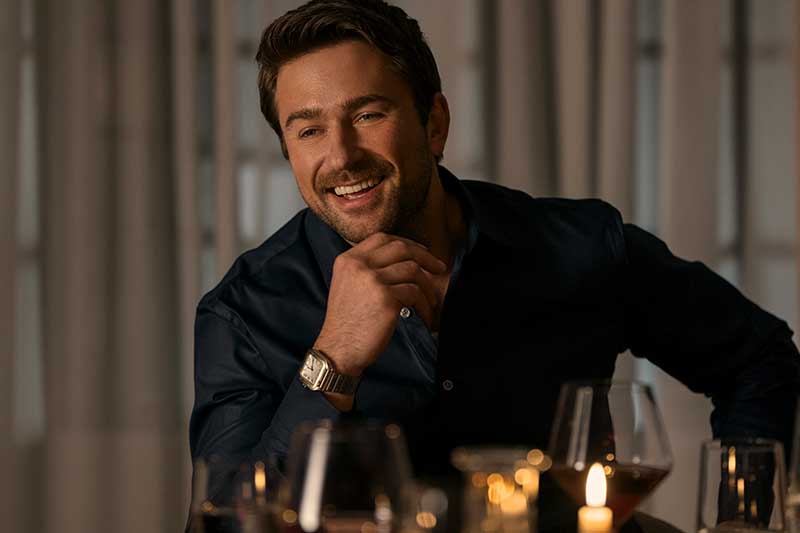
Brandon Sklenar (Andrew Winchester) delivers a solid performance, even if his character is intentionally more opaque. Particularly interesting is the contrast with his role in 1923: A Yellowstone Story. While in 1923 Sklenar plays a man defined by toughness, a rigid moral code, and a classic, almost mythological masculinity, in The Housemaid he is far more ambiguous: seductive, seemingly protective, yet lacking moral clarity. Andrew Winchester is neither hero nor pure antagonist, but a character who thrives on passivity and silence, allowing evil to happen. This contrast highlights the actor’s versatility and his ability to move from archetypal westerns to toxic domestic thrillers without losing credibility.
Supporting appearances by Elizabeth Perkins, Michele Morrone, and Indiana Elle complete the portrait of a luxurious yet profoundly diseased world.
Visually, the film is elegant and cold. The house becomes a character in its own right: spacious, white, orderly, yet claustrophobic. Theodore Shapiro’s score amplifies the sense of unease, while the editing maintains a steady rhythm even during exposition-heavy moments.
Perhaps, when analyzed logically, The Housemaid is full of coincidences, exaggerations, and situations that could be resolved with a simple conversation. But that is precisely where its charm lies. This is not a film about realism, but about emotion, excess, and the guilty pleasure of watching beautiful people do terrible things in even more beautiful houses.
It’s the kind of film that hooks you, shocks you, makes you laugh nervously, and keeps you on edge until the end. The Housemaid is a deliciously dirty, exaggerated, and highly entertaining psychological thriller.
Paul Feig proves he can successfully navigate much darker territory, and the duel between Sydney Sweeney and Amanda Seyfried alone is enough to justify the entire endeavor. It is not a perfect film, but it is a lively, memorable, and deeply entertaining one.
Source: www.cinefan.ro
“ - Alexandru Virgil Avramescu - CineFan.ro